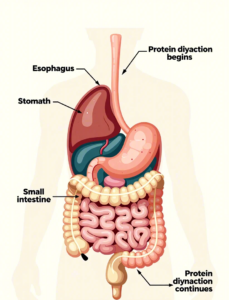
 Protein in the body: digestion from stomach to small intestine
Most people think protein is just muscle food. It isn’t. Protein in the body also builds enzymes, carries oxygen, fights infection, and holds your tissues together, and your muscles are only one place it ends up.
This guide explains what protein in the body is made of, how digestion breaks it down, what it does once it is absorbed, and how the body keeps the right balance every day.
What Is Protein in the Body?
A protein is a long chain of smaller units called amino acids, and every kind of protein in the body is built this way. The body uses 20 common amino acids, and the order in which they link up decides what each protein becomes. A short change in the order can change a protein’s shape and its job.
Protein in the body is not a single material. It is thousands of different molecules, each with a specific role. Hair, enzymes, antibodies, and the hemoglobin in your blood are all proteins.
How Much Protein Is in the Body?
According to a university biochemistry lecture on amino acid metabolism, a 70-kg man holds roughly 12 kg of protein. That is a large share of dry body weight, and it sits mostly in muscle, but also in skin, blood, bone matrix, organs, and enzymes.
The body does not store protein the way it stores fat, so protein in the body has no reserve tank. Most protein in the body is working tissue, so a long shortfall in intake eventually costs you functional protein.
The Four Levels of Protein Structure
Proteins fold into precise shapes, and the shape is what makes them work.
- Primary structure: the sequence of amino acids
- Secondary structure: local coils and sheets formed by hydrogen bonds
- Tertiary structure: the full three-dimensional fold of one chain
- Quaternary structure: several chains joined together, as in hemoglobin
When heat, acid, or other stress unfolds a protein, it is denatured. Cooking an egg is the everyday example. Denaturation usually makes a protein easier to digest, which is one reason food preparation matters.
7 Best Facts About Protein in the Body
1. Protein in the Body Builds and Repairs Tissue
Structural proteins give tissues strength, which is the most visible job of protein in the body. Collagen supports skin, tendons, and bone. Keratin forms hair and nails. Actin and myosin make muscle contract.
Every day the body repairs small amounts of damage in these tissues, and repair needs a steady supply of amino acids.
2. Enzymes Are Proteins
Almost every chemical reaction in your cells is sped up by an enzyme, and enzymes are protein in the body at work. Digestive enzymes, such as pepsin and trypsin, are themselves proteins that break down other proteins.
Without enzymes, reactions would run too slowly to sustain life. That makes this one of the most important roles of protein in the body.
3. Hormones and Signals Use Protein
Some hormones are protein in the body in signal form, either full proteins or short chains of amino acids. Insulin, which controls blood sugar, is a well-known example. Cells also use protein receptors to detect these signals and respond.
4. Transport and Storage
Protein in the body also carries things around. Hemoglobin carries oxygen in red blood cells. Albumin carries fatty acids and many drugs in the blood. Other proteins move nutrients across cell membranes, and some store minerals such as iron.
5. Immunity Depends on Protein
Antibodies are proteins. This protein in the body recognizes invaders and help the immune system neutralize them. Many immune signaling molecules are proteins too.
This is why severe protein deficiency weakens resistance to infection.
6. Fluid and Acid-Base Balance
Protein in the body, especially albumin in the blood, helps keep fluid inside the blood vessels. They also act as buffers that resist sudden changes in pH. If blood protein falls very low, fluid can leak into tissues and cause swelling.
7. Protein Can Be Used for Energy
Protein is not the body’s first-choice fuel, but it can be burned when carbohydrate and fat are not enough. Protein provides about 4 kilocalories per gram, the same as carbohydrate. When amino acids are used for energy, the nitrogen part has to be removed and excreted, which we cover below.
How Is Protein Broken Down? Digestion Step by Step
Digestion has one goal: to turn large food proteins, the main source of protein in the body, into amino acids and very small peptides that the gut can absorb. The VCU open textbook chapter on protein digestion describes the process in stages.
Step 1: The Mouth
Chewing crushes food into small pieces and increases the surface area for later enzymes. Saliva helps swallowing. There is little chemical digestion of protein in the mouth.
Step 2: The Stomach
The stomach does two jobs. First, hydrochloric acid, at a pH between about 1.5 and 3.5, unfolds proteins. This denaturation exposes the peptide bonds that hold amino acids together.
Second, pepsin, activated by the acid, starts cutting those bonds. The result is shorter chains called polypeptides. The stomach churns the mix into a thick liquid called chyme and releases it slowly into the small intestine.
Step 3: The Pancreas and Small Intestine
Chyme enters the small intestine, where the pancreas releases juice containing trypsin and chymotrypsin. Trypsin also activates other digestive enzymes. Together they cut polypeptides into tripeptides, dipeptides, and single amino acids.
Other enzymes, such as carboxypeptidases, remove amino acids from the ends of chains. The cells lining the small intestine add more enzymes on their surface to finish the job.
Step 4: Absorption
Cells lining the small intestine take up single amino acids, dipeptides, and tripeptides by active transport, which uses energy. Inside those cells, di- and tripeptides are broken into single amino acids, which then enter the bloodstream.
Similar amino acids compete for the same transporters. That is one reason extreme amounts of a single amino acid supplement can interfere with the absorption of others.
Absorbed amino acids travel to the liver first, which acts as a distribution center. It keeps some, uses some, and releases the rest into the general circulation.
What Happens After Absorption?
Once absorbed, the supply of protein in the body begins: amino acids enter the blood and join what scientists call the amino acid pool. This is a small, constantly refreshed supply that every tissue draws from.
The Amino Acid Pool Is Small
According to the biochemistry lecture mentioned above, the pool holds only about 90 to 100 g of amino acids, compared with roughly 12 kg of protein built into tissues. The pool is small because it is a transit area, not a store.
Protein Turnover: The Body Recycles Constantly
Healthy adults break down and rebuild about 300 to 400 g of body protein every day. That is far more than most people eat, so protein in the body is recycled again and again. The diet only has to replace what is lost.
This constant cycle lets the body remove damaged proteins, adjust enzyme levels, and respond to changing needs. It also explains why the amount of protein in the body is a moving target rather than a fixed amount.
Where Do Amino Acids Go?
Amino acids from the pool can follow several routes:
- Build new proteins: enzymes, muscle, antibodies, and more
- Make other nitrogen compounds: such as some hormones and neurotransmitters
- Be converted to energy or glucose: when intake exceeds needs or when fuel is short
- Be converted to fat: if energy intake is high overall
What Happens to the Nitrogen?
Amino acids contain nitrogen. When the body burns them, the nitrogen cannot simply be discarded, because ammonia is toxic.
The first step is usually transamination, which moves the amino group to another molecule. This reaction needs vitamin B6. The liver then converts the nitrogen to urea through the urea cycle, and the kidneys remove it in urine. The lecture notes say urea accounts for about 90% of the nitrogen-containing compounds in urine.
This is why very high protein intake adds to the workload of the liver and kidneys, and why people with kidney disease are often given protein limits by their clinicians.
Essential and Nonessential Amino Acids
Not all amino acids are equal for diet planning.
Essential amino acids cannot be made by the body in sufficient amounts, so food must supply them. There are nine:
- Histidine
- Isoleucine
- Leucine
- Lysine
- Methionine
- Phenylalanine
- Threonine
- Tryptophan
- Valine
Nonessential amino acids can be made by the body from other compounds, so they are not required in the diet in healthy people. Some are called conditionally essential because the body may not make enough during illness, stress, or rapid growth.
Complete and Incomplete Proteins
A complete protein has all nine essential amino acids in useful amounts. Eggs, milk, meat, fish, and soy are usually described this way. Many plant foods are lower in one or two essential amino acids, such as lysine in cereals or methionine in legumes.
This doesn’t make plant protein poor. Eating a variety of foods across the day, such as grains with legumes, covers the gaps in most healthy people.
Protein Quality and Digestibility
Not all protein is absorbed equally. [Likely] Scientists score protein quality using measures such as PDCAAS and the newer DIAAS, which account for amino acid content and digestibility. Animal proteins usually score higher than most plant proteins on these scales, but mixing plant sources narrows the gap.
Cooking, processing, and the food matrix all affect digestibility. For example, some plant foods contain antinutritional factors that cooking reduces. If you want a deeper look at one plant protein source, see our article on almonds, their history and nutrition.
How Much Protein in the Body Do You Need? Proportion and Balance
Many readers ask how much protein is enough to keep protein in the body at the right level. The honest answer is that it depends on body size, age, activity, and health.
Nitrogen Balance
In a healthy, well-fed adult, the intake of nitrogen matches the loss, so the amino acid pool stays steady. This is called nitrogen balance. It is the basis for estimating protein requirements.
- Positive balance: intake exceeds loss, as during growth, pregnancy, or recovery from illness
- Negative balance: loss exceeds intake, as in starvation, serious illness, or insufficient protein
Daily Requirements
The widely used recommended dietary allowance for healthy adults is 0.8 grams of protein per kilogram of body weight per day. For a 70-kg adult, that is about 56 g. Recommendations differ by country and organization, so check your local guidelines.
Many experts suggest higher intakes for older adults, who tend to lose muscle, and for people who do regular resistance or endurance training.
A review of dietary protein requirements in adults discusses these unresolved questions, including whether the standard allowance is best for every group. I could not open the full text during research, so treat these points as general guidance and read the review for specifics.
Spreading Intake Through the Day
Some studies suggest that muscle responds best when protein is spread across meals, rather than eaten mostly at dinner. The ideal amount per meal is debated, so don’t treat any single number as a rule.
Is More Protein Always Better?
Not necessarily. Once the amino acid needs of tissues are met, extra protein is burned for energy or converted to other compounds. For most healthy people, a very high intake is unnecessary. Those with kidney problems should follow medical advice.
If you’ve seen bold claims about protein in diet trends, read our article on the paleo diet and what the evidence says. For more on common nutrition misunderstandings, see our guide to food science myths.
What Happens When Protein Intake Is Too Low?
Prolonged low intake shows up first in the tissues where protein in the body turns over fast.
- Muscle loss: the body breaks down muscle to supply amino acids
- Weak immunity: fewer antibodies and slower wound healing
- Hair and nail changes: brittle, thin, or slow-growing
- Swelling (edema): when blood albumin falls
- Fatigue and slow recovery
Severe protein-energy malnutrition is a major public health issue in parts of the world. Programs that fortify staple foods try to prevent related deficiencies, and our article on food fortification explains how that works.
Practical Ways to Support Healthy Protein in the Body
You don’t need complicated rules. These habits cover most people:
- Include a protein source at each meal. Think eggs, dairy, fish, meat, legumes, nuts, or soy.
- Mix plant proteins. Combine cereals with legumes across the day.
- Eat enough total energy. If energy is short, protein is burned as fuel instead of building tissue.
- Prepare food safely. Cook meat, eggs, and fish properly to avoid foodborne illness.
- Be careful with supplements. Whole foods give protein plus other nutrients, and powders vary in quality.
- Match intake to your life stage. Needs rise in pregnancy, childhood, older age, and heavy training.
FAQ
What is the role of protein in the body? Protein in the body builds and repairs tissue, forms enzymes and some hormones, carries oxygen and nutrients, supports immunity, and helps maintain fluid and acid-base balance.
How is protein broken down in the body? Stomach acid unfolds proteins and pepsin cuts them into shorter chains. In the small intestine, pancreatic enzymes such as trypsin and chymotrypsin, plus enzymes on the intestinal lining, break them into amino acids, dipeptides, and tripeptides that are absorbed.
Where does protein digestion start? Mechanical breakdown begins in the mouth by chewing, but chemical digestion of protein begins in the stomach.
What are essential amino acids? They are the nine amino acids the body cannot make in sufficient amounts: histidine, isoleucine, leucine, lysine, methionine, phenylalanine, threonine, tryptophan, and valine.
How much protein does the body store? The body has no dedicated protein store. It holds roughly 12 kg of protein in a 70-kg man, but nearly all of it is working tissue. Only about 90 to 100 g of free amino acids circulates in the pool.
What happens to extra protein? Amino acids not needed for building tissue are used for energy, or converted to glucose or fat. The nitrogen is turned into urea by the liver and excreted by the kidneys.
How much protein do adults need per day? To maintain protein in the body, a commonly used recommendation is 0.8 g per kg of body weight for healthy adults, though needs rise for older adults, athletes, and in some conditions. Check your national guidelines.
Is plant protein as good as animal protein? Plant proteins can fully meet needs when you eat a variety of sources. Many are lower in one or two essential amino acids and slightly less digestible, but combining foods fills the gaps.
Can too much protein in the body be harmful? For most healthy people, higher intakes are generally tolerated, but very high intakes add to the load on the kidneys and are not suitable for people with kidney disease. Follow your doctor’s advice.
Conclusion
Protein in the body is far more than muscle. Protein in the body is structure, chemistry, defense, and transport, and it is constantly broken down and rebuilt from a small, steady pool of amino acids. Digestion does the first part of the job by turning food protein into amino acids, and the liver and tissues do the rest.
The practical lesson is simple. Eat enough varied protein, match your intake to your life stage, and don’t believe claims that more is always better. If you run a food business and want help presenting nutrition claims accurately, our team can help you review labels and content. Schedule a consultation to get started.