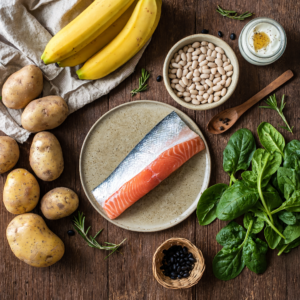
 Potassium in foods: potatoes, beans, bananas, spinach, yogurt, and salmon
Most people picture a banana when they think of potassium in foods, and that is a poor guide. A medium banana has about 420 to 450 mg, while a baked potato has more than twice that, and cooked beans, leafy greens, and yogurt can beat it too.
This guide shows where potassium in foods really comes from, how much you need each day, what the mineral does, and who should be careful with high-potassium foods.
What Is Potassium and Why Does It Matter?
Potassium is an essential mineral and an electrolyte, and potassium in foods is how every one of us gets it. That means it carries an electrical charge when dissolved in body fluids, and your cells use that charge to work.
[Likely] Potassium helps nerves send signals, helps muscles contract (including the heart muscle), and works with sodium to control fluid balance inside and outside cells. You can’t make it, so potassium in foods is your only supply.
Potassium and Blood Pressure
The World Health Organization recommends increasing potassium intake from food to reduce blood pressure and the risk of cardiovascular disease and stroke in adults. According to WHO’s evidence page on potassium, it suggests at least 90 mmol per day, which equals 3,510 mg. The same page says higher potassium intake significantly reduces blood pressure in adults.
What Happens If You Get Too Little?
Low potassium, called hypokalemia, can cause weak muscles and abnormal heart rhythms. A University of Florida Health summary lists these effects, along with a small rise in blood pressure.
The Cleveland Clinic adds that low potassium can raise blood pressure, increase the risk of kidney stones, and pull calcium from bones. Severe deficiency is rare in healthy people and usually comes from underlying disease or certain medicines, not from diet alone.
How Much Potassium Do You Need?
In 2019, the US National Academies set adequate intake (AI) values for adults. According to the USDA’s Food Surveys Research Group, the AI is:
| Group | Adequate Intake (mg/day) |
|---|---|
| Adult men | 3,400 |
| Adult women | 2,600 |
| Pregnant women | About 2,600 to 2,900 |
| Breastfeeding women | About 2,500 to 2,800 |
The pregnancy and breastfeeding ranges come from the University of Florida Health page and vary with age. Children need less, and the amount depends on age.
An adequate intake is not a minimum cutoff. It is a level that is expected to cover the needs of most healthy people.
Are Most People Getting Enough?
Probably not. The same USDA brief reports average intakes of potassium in foods for adults 20 and over of about 2,937 mg for men and 2,324 mg for women. These are single-day figures, so they don’t show usual intake, but they sit below the AI for both groups. Harvard Health also notes that surveys suggest many Americans fall short.
Intakes in other countries differ, so check your national guidelines too.
15 Best Sources: Potassium in Foods You Can Eat Every Day
The values below come from the Harvard Health table, which cites USDA FoodData Central, and from the Cleveland Clinic list. Serving sizes are as given in the sources, and they vary with the cooking method and the specific food.
1. Potatoes (With the Skin): The Top Source of Potassium in Foods
A medium russet potato baked with the skin has about 952 mg, according to Harvard Health. The Cleveland Clinic also puts a medium baked potato at more than 900 mg.
The USDA brief notes that about half of the potassium from vegetables in US diets came from white potatoes (excluding chips). Fries and chips are not the form to aim for, because of added fat and salt.
2. Beet Greens and Other Cooked Leafy Greens: Potassium in Foods Made Easy
Cooked beet greens give about 655 mg per half cup, and Swiss chard about 481 mg, and cooked spinach about 419 mg. Per the Cleveland Clinic, a full cup of cooked beet greens has 1,309 mg, Swiss chard 961 mg, and spinach 839 mg.
Cooking shrinks greens, so a cooked portion packs much more potassium than the same volume raw.
3. White Beans and Other Beans
Half a cup of cooked white beans has about 500 mg. The Cleveland Clinic lists adzuki beans at 612 mg per half cup and lima beans at 969 mg per cup.
Beans are one of the most useful sources of potassium in foods, because they also provide fiber and plant protein. For more on protein in plant foods, see our guide to protein in the body.
4. Lentils: Budget Potassium in Foods
Half a cup of cooked lentils gives about 365 mg. They are cheap, easy to store, and work in soups, curries, and salads.
5. Soybeans and Edamame
Half a cup of cooked green soybeans (edamame) has about 485 mg in the Harvard table. The Cleveland Clinic gives lower values for edamame (338 mg per half cup) and soybeans (443 mg), which shows how much the figures vary between databases and preparations.
6. Sweet Potatoes
A baked sweet potato with skin has about 542 mg. It is a good alternative to white potato, and it adds vitamin A in the form of beta-carotene.
7. Winter Squash
The Cleveland Clinic lists acorn squash at 896 mg and butternut squash at 582 mg per half cup, cooked. Canned pumpkin has about 505 mg per cup.
8. Bananas
A medium banana has about 422 mg (Harvard) to 451 mg (Cleveland Clinic). Plantains are higher, at 663 mg per cup.
Bananas are convenient, but as potassium in foods goes, they are far from the best. Many foods on this list beat them by weight.
9. Yogurt and Milk
One cup of plain low-fat yogurt has about 531 mg. Cleveland Clinic lists nonfat yogurt at 625 mg and low-fat at 573 mg per 8 oz, plain Greek yogurt at 320 mg, and plain low-fat kefir at 399 mg per cup. Nonfat milk has about 382 mg per cup.
Dairy is the main reason many people reach their daily target for potassium in foods without thinking about it.
10. Salmon and Other Fish
Three ounces of cooked wild Atlantic salmon has about 534 mg. Halibut has about 449 mg and yellowfin tuna about 448 mg, according to Harvard Health.
The Cleveland Clinic suggests choosing fish that are high in omega-3 fats and low in mercury.
11. Avocado
Half an avocado has about 364 mg, according to the Cleveland Clinic. It also adds healthy fats, but it is energy dense, so portion size matters.
12. Tomatoes and Tomato Products
One medium tomato has about 292 mg. Tomato products are more concentrated: the Cleveland Clinic lists tomato paste at more than 650 mg per quarter cup. Tomato juice without added salt has about 395 mg per three-quarter cup.
13. Cantaloupe, Mango, and Other Fruit
A quarter of a medium cantaloupe has about 368 mg. A cup of mango has about 277 mg, and a cup of grapes about 288 mg.
14. Dried Fruit
Dried apricots (a quarter cup) have about 378 mg, raisins (1.5 oz) about 318 mg, and five dried figs about 272 mg. Drying concentrates both potassium and sugar, so keep portions small.
15. Clams and Mushrooms
The Cleveland Clinic reports 20 small clams at 1,193 mg and cooked portobello mushrooms at 529 mg per cup. These are less common in everyday meals, but useful for variety.
Quick Reference Table: Potassium in Foods
| Food (serving) | Potassium (mg) |
|---|---|
| Baked russet potato, 1 medium | 952 |
| Beet greens, cooked, ½ cup | 655 |
| Sweet potato, baked, 1 medium | 542 |
| Salmon, cooked, 3 oz | 534 |
| Plain low-fat yogurt, 1 cup | 531 |
| White beans, cooked, ½ cup | 500 |
| Swiss chard, cooked, ½ cup | 481 |
| Banana, 1 medium | 422 |
| Spinach, cooked, ½ cup | 419 |
| Nonfat milk, 1 cup | 382 |
| Lentils, cooked, ½ cup | 365 |
| Tomato, 1 medium | 292 |
Source: Harvard Health table citing USDA FoodData Central.
A Sample Day of Potassium in Foods
Numbers are easier to picture in a real day. Using the values above, here is one way to build a day of meals that gets close to the adequate intake for an adult woman (2,600 mg) without any supplements:
- Breakfast: 1 cup plain low-fat yogurt (531 mg) with 1 medium banana (422 mg)
- Lunch: ½ cup cooked white beans (500 mg) and ½ cup cooked spinach (419 mg)
- Snack: 1 medium tomato (292 mg)
- Dinner: 3 oz baked salmon (534 mg) with a small baked sweet potato (about 540 mg)
That adds up to roughly 3,200 mg, based on the table values, so the day clears the 2,600 mg target for women and approaches the 3,400 mg target for men. Real servings and databases vary, so treat the total as an estimate.
The point is that potassium in foods adds up quickly when you eat beans, greens, dairy, fish, and starchy vegetables. You don’t need to count every milligram.
Where Does Most Dietary Potassium Come From?
The USDA brief breaks down the main contributors to potassium intake for the US population aged two and over:
- Fruits, vegetables, and 100% juices: 23%
- Grain-based mixed dishes such as pasta dishes, pizza, and sandwiches: 15%
- Meats and poultry: 10%
- Milk and milk drinks: 8%
- Coffee and tea: 7%
This is a useful reminder that potassium in foods comes from the whole diet, not only from fruit and vegetables. Mixed dishes and drinks contribute a surprising share.
Foods and Habits That Lower Potassium in Foods
Potassium in foods does not always make it to your plate. A few habits reduce it.
- Ultra-processed foods. Harvard Health notes these are typically low in potassium and high in sodium.
- Boiling in lots of water. [Likely] Potassium dissolves into cooking water, so boiling vegetables and discarding the water removes some. Steaming, roasting, or using the cooking liquid in soups keeps more.
- Peeling. Eating potatoes with the skin keeps more of the mineral.
- Refined grains. [Likely] Whole grains generally contain more potassium than refined versions.
How to Get More Potassium in Foods Without a Supplement
Food is the best place to get potassium, and potassium in foods arrives together with fiber, vitamins, and other nutrients. A few simple changes help:
- Add a bean or lentil dish a few times a week. Soups and stews are easy.
- Leave the skin on potatoes. Bake or roast instead of frying.
- Add leafy greens to cooked meals. Sauté them or stir them into soups.
- Choose yogurt or milk as a snack or breakfast.
- Include fish twice a week. Pick low-mercury, oily types.
- Snack on fruit and a small handful of nuts. See our article on almonds and their nutrition for one nut option.
- Read labels. In some countries, labels now list potassium. Fortified products may help if your diet is limited, and our guide to food fortification explains how fortification works.
Should You Take a Potassium Supplement?
Usually not. Over-the-counter potassium supplements generally contain small amounts, and higher doses are often prescription only. The University of Florida Health page advises people with kidney disease or other chronic illnesses to consult a provider before taking supplements.
[Likely] Many salt substitutes use potassium chloride instead of sodium chloride. That can help some people reduce sodium, but it is risky for people with kidney problems or those on certain medicines. Check with a clinician first.
Who Should Be Careful With Potassium in Foods?
For most healthy people, potassium in foods is safe, and kidneys remove any excess. But the kidneys are what keep the level steady, so the picture changes when they don’t work well.
Hyperkalemia: Too Much Potassium in the Blood
Too much potassium in the blood is called hyperkalemia. According to the University of Florida Health summary, it may cause abnormal and dangerous heart rhythms. It is usually a result of a medical condition or medicine, not a normal diet.
People with kidney problems, especially those on dialysis, should limit potassium-rich foods, and their provider will recommend a diet if needed.
[Likely] Certain blood pressure and heart medicines can also raise potassium levels. If you take regular medication or have kidney, heart, or adrenal conditions, ask your doctor or a renal dietitian before changing your diet or using supplements or salt substitutes.
Common Myths About Potassium in Foods
“Bananas are the best source.” They are good, but potatoes, beans, greens, yogurt, and fish match or beat them. Our guide to food science myths covers more claims like this.
“Juice is the easy fix.” Juice has potassium, but Harvard Health points out that it is high in sugar even when natural, and suggests a small glass of 100% juice with no added sugar.
“More potassium is always better.” Not for everyone. The right amount depends on your health, and people with kidney problems need individual advice.
FAQ
What foods are highest in potassium? The richest potassium in foods comes from baked potatoes with skin, cooked leafy greens such as beet greens and Swiss chard, beans, lentils, yogurt, salmon, sweet potatoes, and winter squash.
How much potassium do adults need per day? The US adequate intake is 3,400 mg for men and 2,600 mg for women. WHO suggests at least 3,510 mg per day for adults to support blood pressure and heart health. National guidelines vary.
Is a banana a good source of potassium? Yes. A medium banana has about 420 to 450 mg, which is useful, though several other foods contain more.
Which has more potassium, a banana or a potato? A medium baked potato with skin has about 950 mg, more than twice as much as a medium banana.
Does cooking reduce potassium in foods? Boiling can leach some potassium into the water, so steaming, roasting, or reusing the cooking liquid keeps more.
What are the symptoms of low potassium? Weak muscles and abnormal heart rhythms, and in the longer term higher blood pressure, kidney stones, and calcium loss from bones. See a doctor if you suspect a deficiency.
Can you get too much potassium from food? Too much potassium in foods is uncommon in healthy people, because the kidneys remove excess. It is a concern for people with kidney disease and some medications, so they should follow their clinician’s advice.
Are potassium supplements safe? They are not suitable for everyone. Talk to a healthcare provider before taking one, especially if you have kidney disease or take regular medicines.
What is the best way to get more potassium? To raise potassium in foods you eat, choose more whole foods such as beans, vegetables with their skins, fruit, yogurt, and fish, rather than relying on pills or processed products.
Conclusion
Potassium in foods is easy to find once you know where to look. Beans, potatoes with their skins, leafy greens, yogurt, fish, and fruit all contribute, and a varied diet built around them will get most healthy adults near the recommended intake.
Match your approach to your own health. If you have kidney disease or take regular medicines, check with your clinician before raising your intake. If you run a food business and want help with nutrient claims or labels, our team can review them with you. Schedule a consultation to get started.