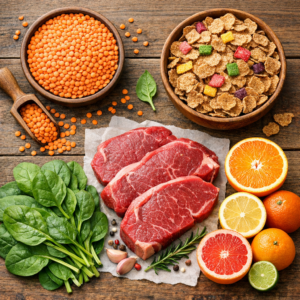
 Iron in foods: lentils, spinach, beef, fortified cereal, and oranges
Most people assume spinach is the champion of iron in foods, and that is a long way from the truth. A serving of oysters or beef liver gives more iron than a serving of spinach, and your body absorbs the iron from animal foods far better than the iron in most plants.
This guide covers the best dietary sources of iron in foods, what iron does for your health, how much you need, how to absorb more of it, and how everyday food choices help prevent iron deficiency.
What Is Iron and Why Do You Need It?
Iron is an essential mineral. Your body can’t make it, so iron in foods is the only natural supply.
According to StatPearls, iron carries oxygen in hemoglobin inside red blood cells. It is also part of myoglobin, which stores and releases oxygen in muscle, and it helps enzymes that drive energy metabolism, DNA and amino acid synthesis, hormone production, and immune function.
In short, without enough iron in foods, your blood can’t carry oxygen well and your cells run short of energy.
Health Benefits of Iron in Foods
Here are the main ways that getting enough iron in foods supports your health.
1. Oxygen Transport and Energy From Iron in Foods
Hemoglobin needs iron to carry oxygen from your lungs to every tissue. When iron is adequate, you have the oxygen supply that muscles and organs need. When it isn’t, tiredness is often the first sign.
2. Healthy Red Blood Cells
Most absorbed iron from iron in foods binds to a carrier protein called transferrin and travels to the bone marrow, where it is used to make red blood cells. The liver stores spare iron as ferritin.
3. Immune Function
The same StatPearls review lists immune function among the roles of iron-dependent enzymes. [Likely] People with low iron often catch infections more easily, though other factors also matter.
4. Growth and Brain Development
[Likely] Iron is especially important in infants, toddlers, and teenagers, because rapid growth raises demand. Low iron in early childhood is linked with problems in development, which is why pediatric guidelines pay close attention to it.
5. Healthy Pregnancy
Pregnancy raises the need for iron in foods sharply, from 18 mg to 27 mg per day, because blood volume expands and the baby needs iron too.
How Much Iron Do You Need?
The recommended dietary allowances (RDAs) for iron in foods listed by StatPearls are:
| Group | RDA (mg/day) |
|---|---|
| Infants (7 to 12 months) | About 11 |
| Menstruating women (19 to 50) | 18 |
| Pregnant women | 27 |
| Adult men | 8 |
| Women past reproductive age | 8 |
[Likely] The infant value above is from my own knowledge of the 7 to 12 month recommendation. StatPearls lists 0.27 mg for the first six months. Check your national guidelines, because numbers differ between countries.
Menstruating women need more iron in foods because they lose about 2 mg of iron per day, according to StatPearls. Heavy periods or frequent blood donation raise the need further.
[Likely] Vegetarians and vegans are often advised to aim for roughly 1.8 times the usual amount, because plant iron is absorbed less efficiently.
Heme and Non-Heme Iron: Two Types of Iron in Foods
Not all iron in foods behaves the same way. There are two forms.
- Heme iron comes from animal foods such as red meat, poultry, fish, and shellfish. The body absorbs it more efficiently, and its absorption doesn’t change much with your iron status.
- Non-heme iron comes from plants, eggs, and fortified foods. Its absorption rises when your stores are low and falls when they are high.
StatPearls estimates that bioavailability is about 14 to 18% for mixed diets that include animal foods, and about 5 to 12% for plant-based diets. That gap is why the amount of iron in foods on a label is only half the story. What your body actually takes up matters too.
The liver hormone hepcidin controls this. When iron is high, hepcidin rises and absorption drops. When iron is low or you are anemic, hepcidin falls and absorption rises. The body has no active way to excrete extra iron, so absorption is the main control.
15 Best Dietary Sources: Iron in Foods
The values for iron in foods below come from a Dartmouth student health iron list. A GoodRx list gives slightly different, rounded numbers, so treat all figures as approximate. Serving sizes are noted.
Animal Sources of Heme Iron
1. Oysters and Other Shellfish
Three ounces of cooked oysters provide about 10.2 mg, the highest of any food in the list. Clams and mussels are also good sources, according to Harvard’s Nutrition Source.
2. Liver
Three ounces of beef liver gives about 7.5 mg. Harvard lists beef and chicken liver and other organ meats among the richest heme sources.
3. Red Meat
Three ounces of beef round has about 4.6 mg, flank steak about 4.3 mg, and pork chops about 3.5 mg. Ground beef is lower, at about 2.2 mg. Cuts differ, so check the specific product.
4. Sardines and Canned Fish
Three ounces of canned sardines in oil gives about 2.5 mg, and canned light tuna in water about 1.3 mg. Fish also supplies omega-3 fats.
5. Poultry
Dark meat has more than white. Three ounces of dark turkey has about 2.0 mg, dark chicken about 1.3 mg, and white chicken about 0.9 mg.
Plant and Fortified Sources of Non-Heme Iron
6. Fortified Breakfast Cereal
Fortified cereals can supply a huge amount. The Dartmouth list shows some brands at 20 to 30 mg per cup, and GoodRx lists 18 mg per 30 g serving. Read the label, because amounts vary widely by brand. For how fortification works, see our guide to food fortification.
7. Lentils
Half a cup of cooked lentils has about 3.3 mg. They are cheap and versatile, and they also supply protein and fiber.
8. Soybeans, Edamame, and Tofu
Half a cup of cooked edamame has about 4.4 mg, and half a cup of firm tofu about 3.4 mg. For more on plant protein, see our article on protein in the body.
9. Beans and Chickpeas
Kidney beans have about 2.6 mg per half cup and chickpeas about 2.4 mg. GoodRx lists canned white beans at about 8 mg per cup.
10. Spinach and Other Cooked Greens
Half a cup of cooked spinach has about 3.2 mg. Cooked Swiss chard has about 4 mg per cup, according to GoodRx.
Spinach contains compounds that reduce how much iron you absorb, so it is a smaller contributor than its reputation suggests. Eating it with vitamin C helps.
11. Blackstrap Molasses
Two tablespoons have about 7.0 mg, though it is a sugar product, so keep the portion small.
12. Seeds and Nuts
Sesame seeds provide about 4 mg per ounce (GoodRx), and cashews about 2 mg per ounce. Almonds are lower at about 0.7 mg for 10 to 12 nuts. For more on nuts, see our guide to almonds and their nutrition.
13. Potatoes With the Skin
One medium potato has about 1.9 mg. It is not a top source, but it adds up in everyday meals.
14. Dried Fruit and Prune Juice
Prune juice gives about 1.5 mg per half cup, and raisins about 0.8 mg per quarter cup. These add some iron, though they are high in sugar.
15. Enriched Grains and Eggs
Enriched pasta or rice gives about 2.0 mg per cup, and a large egg about 1.0 mg. These are not high, but because many people eat them daily, they contribute meaningfully. Harvard lists enriched rice and bread among the common non-heme sources.
Quick Reference Table: Iron in Foods
| Food (serving) | Iron (mg) | Type |
|---|---|---|
| Oysters, cooked, 3 oz | 10.2 | Heme |
| Beef liver, 3 oz | 7.5 | Heme |
| Beef round, 3 oz | 4.6 | Heme |
| Edamame, ½ cup cooked | 4.4 | Non-heme |
| Tofu, firm, ½ cup | 3.4 | Non-heme |
| Lentils, ½ cup cooked | 3.3 | Non-heme |
| Spinach, ½ cup cooked | 3.2 | Non-heme |
| Sardines, canned in oil, 3 oz | 2.5 | Heme |
| Chickpeas, ½ cup | 2.4 | Non-heme |
| Potato, 1 medium | 1.9 | Non-heme |
| Egg, 1 large | 1.0 | Non-heme |
Source: Dartmouth student health iron list.
How to Absorb More Iron in Foods
How you eat matters almost as much as what you eat, and it changes how much iron in foods you actually absorb.
What Helps Absorption
- Pair plant iron with vitamin C. Citrus fruit, orange juice, strawberries, and grapefruit help the body absorb non-heme iron, according to both Harvard and Dartmouth.
- Eat meat, fish, or poultry in the same meal. StatPearls notes that these foods enhance absorption of other iron in the meal.
- Cook in cast iron. StatPearls notes that cooking in iron cookware increases the iron content of food.
What Blocks Absorption
- Tea and coffee. Polyphenols and tannins bind iron. Drink them between meals rather than with them.
- Phytates. Found in whole grains, bran, and legumes. Soaking, sprouting, or fermenting can reduce them.
- Calcium. Large amounts, especially from supplements, reduce absorption. Take calcium at a different time from iron-rich meals.
A practical example of using iron in foods well: a lentil soup with tomatoes and a squeeze of lemon beats the same soup eaten with a cup of black tea.
Iron Deficiency: Why It Matters
Iron deficiency develops in stages. First, stores fall, often without symptoms. Next, the body struggles to make hemoglobin, and iron deficiency anemia can follow.
StatPearls estimates that dietary iron deficiency affects over 1.6 billion people globally.
How Common Is Anemia?
According to WHO, anemia in 2019 affected:
- 30% of women aged 15 to 49
- 37% of pregnant women
- 40% of children aged 6 months to 5 years
Not all anemia is caused by iron deficiency. WHO notes that other causes include other nutritional deficiencies, infections, inflammation, gynecological and obstetric conditions, and inherited blood disorders. That is why a blood test, not guesswork, should come before treatment.
Common Signs of Low Iron
[Likely] Typical signs include tiredness, weakness, pale skin, shortness of breath on exertion, headaches, dizziness, cold hands and feet, brittle nails, and in children, poor growth or slower development. These signs are not specific to iron, so see a clinician for testing.
Who Is at Higher Risk?
StatPearls lists these groups:
- Infants and toddlers, and adolescents during growth spurts
- Menstruating women, especially with heavy bleeding, and frequent blood donors
- Pregnant women
- Vegetarians and vegans
- People with food insecurity or intestinal parasite infections
- People with celiac disease, Crohn disease, malabsorption, or past gastric bypass surgery
How Food Helps Prevent Iron Deficiency
Prevention starts with the plate, and iron in foods is the foundation. A few steps work for most people.
- Include an iron source at most meals. Mix heme and non-heme sources where you can.
- Add vitamin C to plant-based iron meals. A piece of fruit or a tomato-based sauce is enough.
- Choose fortified staples. Fortified cereals, flours, and enriched grains help many populations, which is why public health programs fortify them.
- Time your tea and coffee. Keep them away from your main iron-rich meals.
- Cook smart. Use cast-iron pots for acidic, moist dishes, and soak or ferment grains and legumes.
- Plan for higher-need periods. Pregnancy, adolescence, heavy periods, and a vegetarian diet all call for extra attention.
Should You Take an Iron Supplement?
Not without advice. Harvard’s Nutrition Source warns that high-dose iron commonly causes constipation and nausea, and that excess iron can also cause stomach upset, vomiting, and abdominal pain. It also advises asking a doctor or pharmacist before taking supplements and checking whether a label lists elemental iron.
StatPearls adds that toxicity occurs with excess supplements, including accidental ingestion by children, and with genetic iron overload such as hemochromatosis. It says that iron toxicity from food alone is unlikely, because absorption falls when stores are adequate.
[Likely] The adult tolerable upper intake level for iron is generally given as 45 mg per day, which applies to total intake from all sources in people without a medical need. Doctors may prescribe more for treating deficiency.
People with hemochromatosis should follow a low-iron diet and avoid iron and vitamin C supplements, according to Harvard. Keep supplements out of children’s reach.
Common Myths About Iron in Foods
“Spinach is the best source.” It has iron, but it also has compounds that reduce absorption, and many animal foods and fortified products supply more. Our guide to food science myths covers more claims like this.
“Vegetarians can’t get enough iron.” They can, with planning: legumes, tofu, seeds, whole grains, fortified foods, and vitamin C at meals. They simply need to pay more attention.
“More iron in foods is always better.” No. Excess iron from supplements can be harmful, and people with hemochromatosis must avoid it.
“Tea is harmless for iron.” Tea and coffee can reduce absorption when drunk with meals, so move them between meals.
Sample Day: Iron in Foods for a Menstruating Woman
Using the values above, here is one way to build toward 18 mg from iron in foods without supplements. The figures are estimates, and the cereal does most of the work, so check your label.
- Breakfast: 1 cup fortified cereal (about 18 to 20 mg on some brands) with a small glass of orange juice
- Lunch: Lentil soup with tomatoes (about 3.3 mg per half cup of lentils) and a slice of bread
- Snack: A handful of cashews and a piece of fruit
- Dinner: Beef or sardines with spinach and a squeeze of lemon (about 2.5 to 4.6 mg plus 3.2 mg)
Without fortified cereal, iron in foods would have to come from more meat, legumes, and greens, and you’d still likely fall short of 18 mg without careful planning. This is one reason many menstruating women are at risk.
FAQ
What foods are highest in iron? The best iron in foods comes from oysters, beef liver, red meat, fortified breakfast cereals, edamame, tofu, lentils, and cooked spinach.
How much iron do I need per day? Adult men and women past menopause need 8 mg, menstruating women need 18 mg, and pregnant women need 27 mg, according to StatPearls. National guidelines may differ.
What is the difference between heme and non-heme iron? Heme iron comes from animal foods and is absorbed more efficiently. Non-heme iron comes from plants, eggs, and fortified foods, and its absorption depends on your iron stores and what else you eat.
Does vitamin C really help iron absorption? Yes. Vitamin C converts iron into a more soluble form, so eating citrus, tomatoes, or strawberries with plant iron improves absorption.
Can I get enough iron on a vegetarian diet? Yes, with planning. Combine legumes, tofu, seeds, whole grains, and fortified foods with vitamin C, and avoid tea and coffee at meals.
What are the symptoms of iron deficiency? Tiredness, weakness, pale skin, breathlessness, headaches, and cold hands and feet are typical, though these have many causes. A blood test confirms it.
Can you get too much iron from food? Too much iron in foods is unlikely, because absorption falls when stores are adequate. Excess usually comes from supplements or a genetic condition such as hemochromatosis.
Should I take iron supplements? Only on a clinician’s advice, after testing. High doses cause side effects and can be dangerous, especially for children.
Is cooking in cast iron useful? Yes, it raises iron in foods you cook. StatPearls notes that cooking in iron cookware increases the iron content of food.
Conclusion
Iron in foods comes in two forms and from many sources. Shellfish, liver, and red meat give the most absorbable iron, while lentils, tofu, seeds, greens, and fortified cereals are the backbone of plant-based intake. Pair plant sources with vitamin C, keep tea and coffee away from meals, and pay extra attention in pregnancy, adolescence, and during heavy periods.
If you think you may be iron deficient, get a blood test before you buy supplements. If you work in food and want help with fortification, labeling, or nutrient claims, our team can review your products. Schedule a consultation to get started.